





Senior Living Communities vs. Home Healthcare




1. What Is Home Healthcare?
Home healthcare provides a wide range of medical services within a client’s home after an injury or illness. Home healthcare is tailored to your senior family member’s needs so they can receive as much or as little support as they need.
Home Healthcare vs. Home Care
First, let’s compare home healthcare and home care. These terms are often used interchangeably, and although they do have similarities, they’re not the same thing.
Home Healthcare
- Is prescribed by a physician
- Offers skilled care provided by healthcare professionals, such as nurses
- Is covered by Medicare, Medicaid, or, in some cases, private insurance
- Can provide medical care services, including wound care; pain management; medication management; intravenous therapy; and speech, occupational, and physical therapy
Home Care
- Is provided by nonclinical caregivers
- Is paid for out of pocket
- Can provide reminders to take medication at the required times, but cannot help with medication management
- Offers assistance with everyday personal care tasks, such as bathing and grooming
- Can help with household chores, grocery shopping, errands, and meal preparation
- Can provide transportation as needed and offer socialization opportunities

2. Assistance Home Healthcare Provides
With home healthcare, your family member receives medical assistance from a licensed healthcare professional with tasks such as taking medications, pain management, wound care, and more, depending on their unique needs. They’ll also check vitals, such as blood pressure, heart rate, temperature, and breathing.
Home healthcare staff often track what the person they’re caring for has been eating and drinking to ensure they’re getting adequate nutrition; however, they don’t assist with meal preparation or daily household tasks.
Care Coordination
Care coordination is important with any type of medical care, and home healthcare is no exception. Home healthcare staff communicate regularly with the person they’re caring for as well as with their other healthcare providers.
Length of Care
The length of care also depends on your family member’s needs and their doctor’s orders. If their care needs change in the future—whether they require more or less support—the home healthcare service can adapt to meet their needs.
Hiring a Home Healthcare Provider
If you pursue home healthcare, you’ll meet with a care coordinator or nurse through the provider you choose. The purpose of this meeting is to ensure a common understanding of your family member’s goals and the services they require. The care coordinator or nurse will then put together a care plan, match your family member with a caregiver, and determine the frequency of visits. Frequency varies greatly depending on what your family member requires, whether it’s daily one-hour visits or 24-hour care.
Explore Related Resources

Is Senior Living Right for You?
Explore your senior living options by answering a few questions. Based on your responses, you will receive personalized recommendations to guide you in your search.
Take the Assessment
Where to Start Your Senior Living Journey
Ready to move forward? Get the step-by-step guide to finding the ideal community for a fulfilling future.
Start Your Journey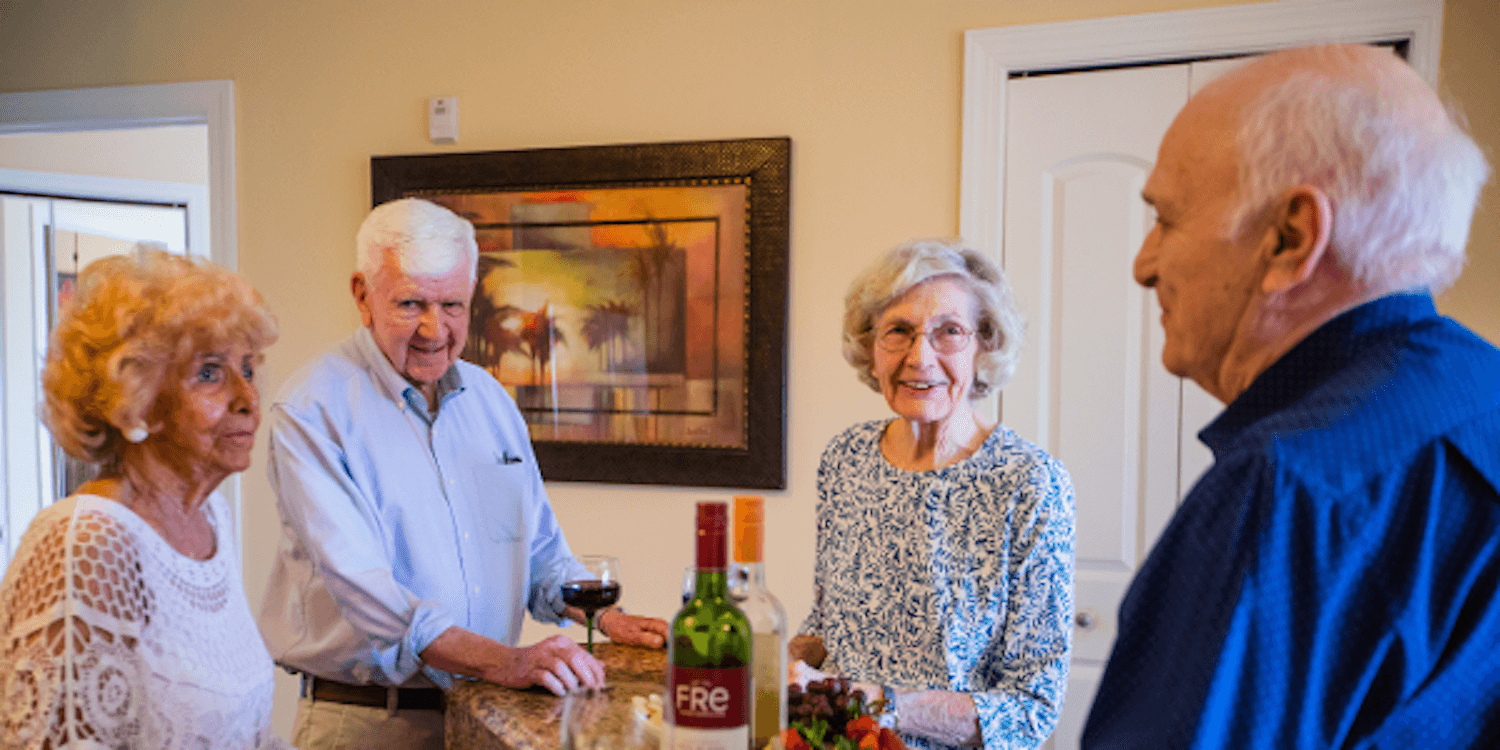
Planning Ahead: When to Start Looking Into a Senior Living Community
Get information and tips to know when it’s time to start researching senior living communities.
Get the Tips
3. What Is Community Care?
Community care is just that: tailored care provided in a community setting, such as senior living. There are a few different senior living choices available, including independent living, assisted living, and memory care.
Assisted Living
Assisted living is ideal for seniors who require assistance with activities of daily living, whether it’s light supportive care, such as bathing or dressing, or comprehensive care that places the responsibility of all daily activities in the hands of a trained staff member. Assisted living communities work hard to understand each person’s unique needs by conducting regular assessments, working with family members, and coordinating care with the resident’s physicians to fine-tune the care provided. Residents receive the support they need during daily activities while participating in enriching activities and making new friends.
Keep Reading About Assisted Living
Memory Care
Memory care communities are ideal when it’s no longer safe for your family member to live in their current residence due to Alzheimer’s disease or another form of dementia. Each resident receives customized programming, including healthcare provider visits every week. High-quality memory care is person-directed care, which means each resident’s preferences, choices, and routines are respected. Memory care communities also provide additional security measures to prevent residents from wandering.
Keep Reading About Memory Care
Independent Living
Independent living is best for seniors who don’t require assistance with activities of daily living and simply want to enjoy a low-maintenance lifestyle. Residents in an independent living community give up the burden of everyday chores to spend more time on hobbies and activities they enjoy. Regular events, special programming, and both structured and casual social opportunities to make new friends are offered.
Explore Related Resources

Find the Right Level of Care
Understand your care needs by learning about ADLs and IADLs and discover the support that's right for you.
Start Assessment
Understanding Your Senior Living Options
Have questions about what types of senior living options are best for you?
Start Your Senior Living Search
4. Benefits of Senior Living Communities
There are several benefits of senior living, including:
Amenities
Senior living communities offer a wide range of amenities, including personalized activities, walking trails, pet-friendly accommodations, and more. Communities take a holistic approach to supporting residents and helping them live their best lives.
Services
One of the top benefits of senior living communities is the services often available on-site. For example, finding motivation to exercise is easier when a fitness center is within the community. Additionally, community members have access to on-site medical and healthcare services, such as physical therapy and pharmacies. Some locations also provide other amenities, such as salons.
Dining
Part of living well is enjoying delicious, healthy food. At Cedarhurst, we take pride in our state-of-the-art culinary programs, such as Crafted by Cedarhurst®, where delicious food is carefully prepared by our dining team. We provide meal options that are heart-healthy, gluten-free, diabetic-friendly, or low-sodium and choices that are designed to preserve cognitive function and Boost Your Brain℠.
Socialization
As people age, it’s natural for their social circles to get smaller. This can lead to feelings of loneliness or isolation. Senior living communities are designed around social opportunities to combat feelings of isolation. High-quality communities help residents make new friends with similar interests while they participate in activities or meet up in the dining room over a meal.
Routine
A sense of routine is essential for people with Alzheimer’s disease or other forms of dementia. Familiarity reduces stress and provides a stable environment. Senior living communities support residents by aligning with their existing routine as much as possible, right down to following an early bird or late-riser schedule.
Explore Related Resources

The Holistic Approach to Aging and Health with Senior Living
Many factors can weigh on your mind when considering senior living.
Explore Cedarhurst's Approach to Choosing Senior Living.png)
Everything You Need to Know About Social Health in Senior Living
Take a look at the impact of senior isolation and loneliness and the benefits of senior socialization.
See the Impact
The Importance of a Daily Routine for Dementia Care
Find ways to support your family member while preserving your own well-being and sense of purpose.
Learn What You Need to Know
5. Home Healthcare and Community Care: Things to Consider
The benefits of receiving care at home seem clear, but it’s important to consider all points of view, including the downsides, before arriving at a decision. Let’s take a look at the aspects you may want to consider, depending on your family member’s circumstances.
Is Your Family Member’s Current Residence Safe?
If your family member is experiencing falls, declines in physical health, or has been diagnosed with Alzheimer’s disease or another form of dementia, community care provides additional around-the-clock support and security measures that may be beneficial.
Is Your Family Member’s Current Residence Fit for Purpose?
With home healthcare, your senior family member can continue following their routine as much as possible in their own space. However, it’s important to consider if the living space is optimized for their specific care needs.
For your family member to stay in their current residence, they may need to make adjustments to their environment. Some changes, such as removing clutter, rightsizing, and adding grab bars, may be relatively simple, but some changes may be more considerable, such as adding a stair lift or ramp. Consider the adjustments required and their associated costs, and compare those with the cost of a senior living community to ensure you’re making an informed decision.
Is the Home Healthcare Provider the Right Match?
It can take a while to find the right home healthcare provider as you navigate the process of determining your family member’s needs, finding care services, and establishing the care schedule. Additionally, it will take some time for them to adjust to regularly having a new person in their residence.
Is Home Healthcare or a Senior Living Community More Affordable?
One of the top questions about senior living communities is cost. Many people make assumptions about the high cost of senior living, but they often find that the cost of senior living is less than or equal to the cost of staying in a current residence.
Senior living costs vary from person to person because the price reflects each individual’s needs and the services they require. The cost of living in your area can also affect senior living pricing.
Is My Aging Family Member in Good Hands for the Long Term?
When evaluating options, consider how your family member’s needs may change over time, especially if they have a progressive condition, such as Alzheimer’s disease or another form of dementia. Senior living communities have staff members on hand around the clock who are accustomed to meeting the unique care needs of people with Alzheimer’s disease and other forms of dementia. The best communities also have resources ready to adjust to your family member’s changing needs so they don't have to switch communities.
Explore Related Resources

Understanding the Cost of Senior Living
Concerned about costs? Compare senior living with home expenses using our Senior Living Cost Calculator.
Calculate the Costs
Talking About Senior Living: Conversation Starters for Family Members
This guide walks you through the initial steps of the senior living journey, such as identifying signs that it's time for a move and having productive conversations with family members.
Start the Conversation
Embracing a New Chapter: A Helpful Guide for Seniors on Downsizing or Rightsizing
Explore how to reduce your belongings, the benefits of senior rightsizing, and more.
Get Guidance on Transitioning to Senior Living