








.jpg?width=740&height=370&name=Blog%20179%20-%20Does%20my%20spouse%20need%20assisted%20living%20(1).jpg)
Have you noticed changes in your spouse’s daily routines, mobility, medication management, or social activities? These changes often happen gradually, which makes it hard to know when additional support may be beneficial.
The truth is that many couples quietly navigate these challenges together for months—or even years—before exploring their options, such as assisted living for couples. Along the way, one spouse often takes on more and more caregiving responsibilities, sometimes without realizing it. For many couples, this is where assisted living can help.
As you explore whether assisted living may be the right next step, remember that support is also available for caregivers. Sometimes, the best thing you can do for the person you love is make sure you both have the help you need to live fully.
In this guide, we'll discuss:
- Recognizing Common Signs Your Spouse Needs Assisted Living
- Finding Support and Ease as a Caregiver
- Having the Conversation with Your Spouse
- Making the Move to Assisted Living for Couples
- Looking for Assisted Living Communities
Recognizing Common Signs Your Spouse Needs Assisted Living
Realizing a partner requires extra assistance isn't always immediate because changes frequently happen over time. However, exploring a move sooner can support independence and improve quality of life for both of you.
Consider these common signs that it may be time to look into supportive care options:
- Personal hygiene changes: Bathing, grooming, or getting dressed becomes more difficult.
- Household tasks fall behind: Laundry, meals, bills, or home upkeep are no longer being managed consistently.
- Medication management becomes a concern: Missed doses, forgotten refills, or confusion about prescriptions become more common.
- Mobility decreases: Trouble walking, standing, or maintaining balance increases the risk of falls.
- Daily safety diminishes: Driving difficulties or other safety concerns begin affecting daily life.
- Socialization reduces: Activities and social connections decline in favor of staying home.
- Proper nutrition slips: Skipped meals, limited food choices, or unintended weight loss become noticeable.
Understanding ADLs and IADLs
As you research assisted living, you may come across the terms activities of daily living (ADLs) and instrumental activities of daily living (IADLs). ADLs include essential personal care tasks, such as bathing, dressing, eating, and mobility, while IADLs involve responsibilities such as managing medications, preparing meals, housekeeping, and transportation.
If you notice that your spouse is beginning to struggle with ADLs, it may be time to explore assisted living. These communities are designed to provide personalized support with everyday tasks while helping residents maintain as much independence as possible.
Not sure exactly how much support your spouse could benefit from? Take our quick assessment to better understand which level of care may be the right fit. You can also print out our ADL checklist below and take it with you on the go:
Finding Support and Ease as a Caregiver
As a caregiver, you may find yourself managing medications, coordinating appointments, handling household responsibilities, or providing support with daily routines. These small acts of love quickly become a large part of everyday life. 
Sometimes, a sudden health event can be the catalyst for change. That was the case for Richard and Margaret Hart. Margaret was navigating dementia, and Richard served as her primary caregiver, a role he gladly took on for his wife. Everything shifted when Richard suffered a leg injury. Suddenly, he went from acting as the caregiver to needing care himself, leaving him unable to provide assistance at night. Faced with this challenge, the couple explored care options and decided to try assisted living.
As Richard puts it, "Nobody thinks about senior living until something happens. And once you move in, you realize you moved in about two years too late."
The good news is that senior living can provide support for both people, not just the spouse with more immediate care needs. Many communities offer personalized care plans that allow each resident to receive the level of assistance that's right for them while continuing to share life together.
Having the Conversation with Your Spouse
Talking about assisted living can be emotional, even when additional support could improve daily life. Approach the conversation with empathy, listen carefully, and give your spouse space to share their concerns and priorities. 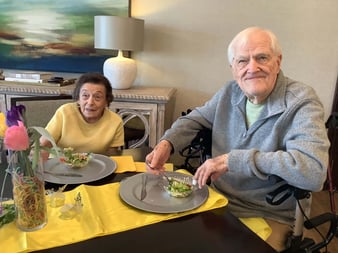
For Ed and Linda, deciding to move to assisted living as a couple wasn't an overnight decision. After thoughtful conversations with each other and their family, they chose a community just minutes from home. Their family says, "Living at Cedarhurst has enriched their lives. They never feel isolated or alone."
Looking for help getting the discussion started? Explore our article about compassionate conversation starters for families exploring senior living.
If you're ready to explore your options further, consider scheduling a tour to see what daily life is like in a community near you.
Making the Move to Assisted Living for Couples
One of the most common concerns spouses have when moving to assisted living is whether they will have to live apart. The good news is that assisted living for couples is more flexible than many people realize. In many senior living communities, couples can continue living together while receiving individualized support based on their unique needs.
According to the U.S. Centers for Disease Control and Prevention, staying connected with others fosters a sense of belonging and helps people feel loved, supported, and valued. Those social connections don't just benefit emotional well-being—they're also linked to better physical health and a lower risk of chronic conditions and serious illnesses, including heart disease, stroke, and dementia.
Can Couples Stay Together in Assisted Living?
Often, yes. Many assisted living communities offer shared apartments where couples can continue living together while one or both spouses receive the support they need. They can share meals, enjoy activities, and maintain familiar routines without the demands of home maintenance or caregiving.
Tim and Dot's story is a perfect example. After Tim suffered a stroke, Dot chose a Cedarhurst community where he could receive the support he needed while remaining close to her. She visited him often, and later moved into the community herself so they could continue enjoying walks, meals, music, and time together.
What If Only One Spouse Needs Assisted Living?
When one spouse needs assisted living, personalized care plans allow each resident to receive the specific assistance they need. One partner may benefit from help with medications, mobility, or daily routines, while the other remains largely independent. This means couples can continue living together without paying for services they don't need.
As care needs change over time, support can often evolve as well, helping couples remain in a familiar environment surrounded by the people and relationships they've come to know.
Looking for Assisted Living Communities
Once you've started exploring senior living options, it can be difficult to know what truly matters. Beautiful buildings and amenities certainly have their place, but the right community should ultimately help both spouses feel supported, connected, and at home.
As you tour communities, pay attention not only to the services offered but also to how residents interact with one another, how team members engage with residents, and whether the environment feels welcoming and comfortable for both of you.
What to Look for in an Assisted Living Community
A great assisted living community is about more than attractive buildings and amenities. It should feel welcoming, offer personalized support, and help both spouses stay connected and engaged.
As you tour communities, ask yourself if they provide:
- Personalized care plans that adapt to changing needs
- Medication management and staff on-site 24/7
- Engaging events and opportunities for social connection
- Flexible dining and inviting shared spaces
- Apartment options that work well for couples
Questions to Ask During Your Tour
Asking thoughtful questions can help you determine whether a community is the right fit for your family, including:
- How do team members get to know a new resident's personal history, interests, and preferences?
- Can you describe the safety features included in resident apartments?
- What daily events and programs are most popular with residents?
- How do you support couples when one spouse requires more care than the other?
- How does the community handle transitions if a resident's care needs change over time?
For additional guidance, explore our senior living tour checklist with key questions to consider during your visit.
Most importantly, remember that a tour isn't a long-term commitment. It's an opportunity to gather information, ask questions, and explore what life with additional support could look like.
If you're considering assisted living for your spouse, take your time and learn about your options. Gather information, explore local resources, and seek out stories from families who have walked a similar path. The right community can help both of you enjoy more meaningful time together while providing the support you need every step along the way.
Still have questions about which care option is right for you? Explore our guide, Understanding Your Senior Living Options.

Continue Exploring
- Is Assisted Living Right for Your Family Member?
- What Is Assisted Living? A Simple Guide for Families
- How to Be an Effective Advocate for Your Family Member
Ready to tour a community? Begin by searching assisted living communities near you.